Life with Invisalign: 10 Questions Every Patient Asks
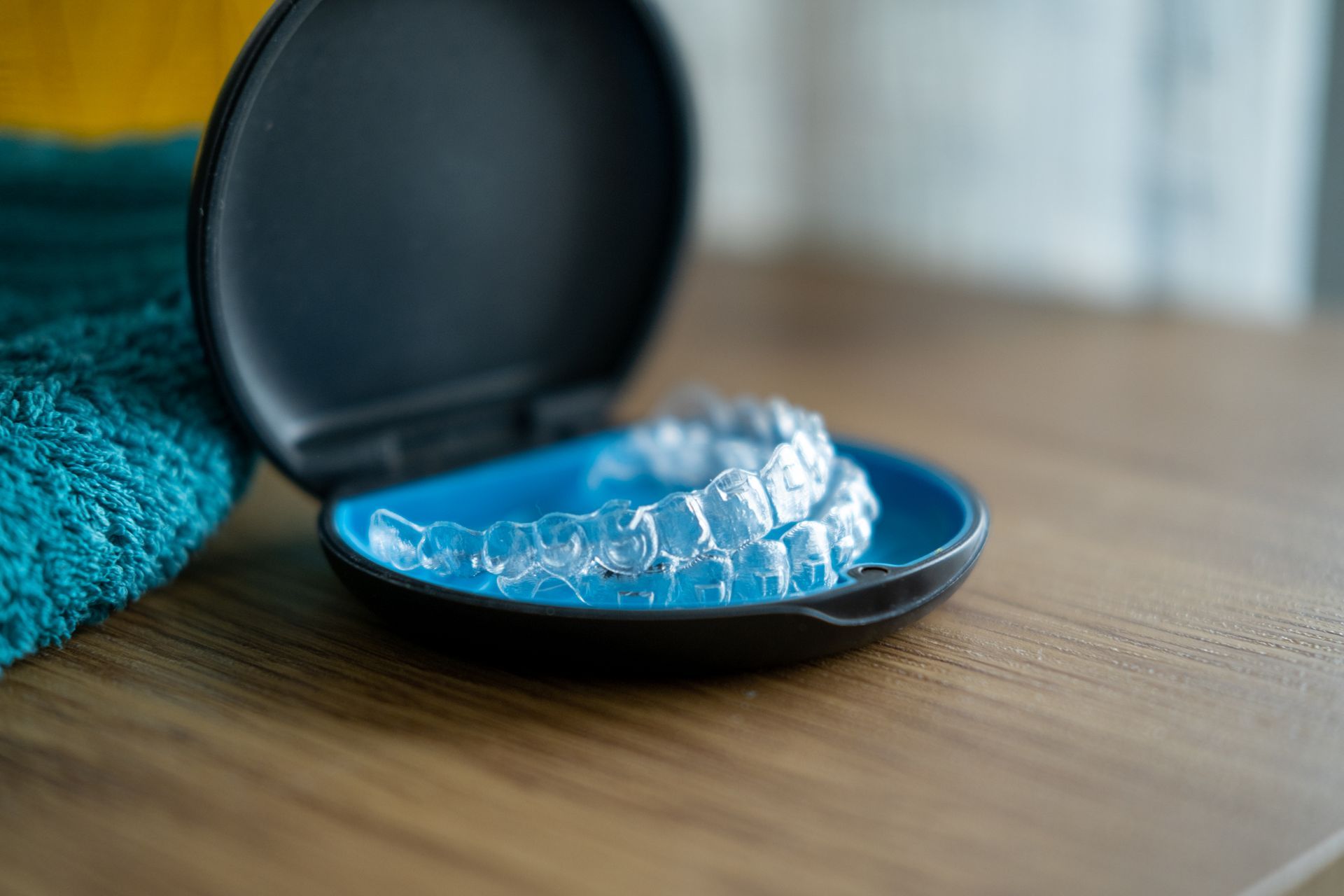
It’s your first day home with your Invisalign trays and all of a sudden the questions start hitting you. Not the big ones that you thought to bring up at your appointment, but the small ones. The ones that nobody warned you about, but that are the most tied to what life with Invisalign looks like. Questions like can I drink my morning coffee? What about dinner with friends? Can I put them back on after a meal?
We understand how important it is to have answers to those questions, which is why we’ve compiled a Q&A that breaks down 10 of the questions we get asked most when it comes to life with Invisalign.
What Can You Eat With Invisalign?
One of the biggest lifestyle differences between Invisalign and braces is that with Invisalign you can eat whatever you want. Because when it comes time to eat, you just remove the aligners. Popcorn, steak, apples, tortilla chips? It’s all fine!
As long as you’re following a good routine of trays out, eat, rinse, brush, then trays back in, you don’t have to follow any rules for what you can eat with Invisalign.
Making sure you put your trays back in after you eat is an important part of making sure your treatment is effective and efficient. It’s recommended that you wear your aligners for 20 to 22 hours a day. And each eating window counts against your time budget, which is why you need to be diligent about popping them back in after you eat. There should be plenty of time for breakfast, lunch, dinner, and a quick snack, but if you’re somebody who likes to graze throughout the day you need to be mindful of how quickly non-wear time can add up.
How Do You Remove Invisalign Trays?
In order to remove your Invisalign trays, you’ll start at the back molars, lifting one of the sides with your fingertip. You’ll work your way forward and when you reach the front you’ll do the same thing on the other side. If you found yourself here because you were searching for how to get Invisalign off easier, then here are a couple bits of helpful info:
- If you’re struggling using your fingers, you can buy aligner removal hooks. These are small plastic tools that give you leverage when your fingers can’t quite get the job done. They’re cheap and should be easy to find.
- Aligner trays are tightest in the first day or two of each new set, so that snugness you’re experiencing that makes them harder to remove is to be expected. They’ll loosen up and be easier to remove after a couple of days.
- Removing them gets easier with practice. Soon, how to remove Invisalign won’t be a question, it'll just be muscle memory.
Can You Drink Coffee With Invisalign?
You can drink coffee with Invisalign, but don’t make the mistake of doing so with them in. Make sure you take them out like you would if you were eating. Hot liquids can warp the plastic and coffee is notorious for staining trays yellow.
If your trays are warped they won’t fit right and therefore won’t do their job effectively. If they’re stained, well that defeats the purpose of clear aligners, doesn’t it? Plus, nobody wants yellow teeth.
The easiest solution is to pair coffee with a meal window where you’re already taking your aligners out. For example, you could have coffee with breakfast.
Now, if you like to sip on your coffee for hours at a time, it might be time to rethink your habit, so it’s more sustainable with treatment.
What Can You Drink With Invisalign?
Plain water is the only thing you should drink with your Invisalign aligners in. Coffee, tea, soda, juice, and alcohol all require taking your trays out first.
Can you drink water with Invisalign?
The answer is yes. As much as you want. In fact, while staying hydrated is always important, it can be especially important at the beginning of treatment, as many patients will notice that their mouths are drier than normal for the first few weeks of having Invisalign. And dry mouth can lead to bacteria buildup in your mouth.
Can you drink sparkling water with Invisalign?
Same as any other drink that isn’t plain water, you should take your trays out before drinking sparkling water. The bubbles in sparkling water actually come from carbonic acid, making sparkling water mildly acidic. The prolonged exposure caused by this acid getting trapped against your teeth by aligner trays isn’t ideal for your enamel. And it’s worse when the sparkling water is flavored, especially a citrus flavor, as the added citric acid can eat at the enamel.
Can you drink alcohol with Invisalign?
Yes, but with the same trays-out rule. Red wine stains trays. Cocktails are often chock full of sugar. Beer can stain, it’s carbonated, and carries residual sugar that bacteria feed on.
If you have a wedding, a dinner out, or a night where drinks will be stretching on for a few hours, you can still make it work and have a fun night, but it’s important to plan. Treat the occasion as one longer tray-out window, making sure to bring your case. At the end of the night, clean your mouth, and then pop the trays back in, so you don’t lose your overnight wear.
Can You Chew Gum with Invisalign?
No, you can’t chew gum with your Invisalign trays in, because the gum sticks to the plastic, can pull your trays out of position, and potentially damage them in the process.
Any actions that distort or warp the plastic of your aligners are problematic, because your aligners are precisely designed to move your teeth a certain way, and if they’re warped, then they begin applying the wrong forces to your teeth. At which point, your aligners can actually start causing more harm than good.
A lot of people who are avid gum chewers are disappointed to learn they can’t chew gum with Invisalign, but the good news is that you can still chew gum while your trays are out during a meal, popping in a piece after you’re done eating, for example.
One thing to note is that chewing a piece of gum after your meal doesn’t replace brushing your teeth. If fresh breath is what you’re after, the routine of a mouth rinse and quick brush after meals before putting your trays back in is the key. This routine will leave your mouth cleaner and fresher than any piece of gum ever could.
Can You Smoke with Invisalign?
If you smoke, take your Invisalign trays out before you do. Smoke stains aligners quickly, and nicotine can impact the way in which your teeth respond to treatment.
Aligners are made of a clear plastic, designed to be “invisible,” but when you smoke, they pick up a yellow film that distorts their appearance. This happens within a few days of smoking with them in, and there isn’t a way to reverse the appearance of the trays once they’re stained.
Now on to nicotine. There are two ways that nicotine can affect treatment. The first, is that nicotine narrows your blood vessels and cuts down saliva flow. Saliva is extremely important for your oral health as it neutralizes acids, while also flushing out food debris and bacteria that are on your teeth. As we mentioned earlier, Invisalign can already impact the amount of saliva that can reach your teeth, and many patients experience dry mouth with treatment. By further inhibiting saliva production, nicotine increases the risk of cavities and gum disease caused by dry mouth.
Now on to nicotine. There are two ways that nicotine can affect treatment. The first, is that nicotine narrows your blood vessels and cuts down saliva flow. Saliva is extremely important for your oral health as it neutralizes acids, while also flushing out food debris and bacteria that are on your teeth. As we mentioned earlier, Invisalign can already impact the amount of saliva that can reach your teeth, and many patients experience dry mouth with treatment. By further inhibiting saliva production, nicotine increases the risk of cavities and gum disease caused by dry mouth.
The second problem with nicotine is still being researched, but is worth mentioning. Both a 2017 study in the International Journal of Oral Science and a 2021 meta-analysis in PLOS One found that nicotine sped up tooth movement in rats, with the 2017 study also noticing more bone loss around the roots and a higher rate of root resorption. This means that while your teeth might move into their new positions faster, it could be too fast for your body to keep up, causing shorter roots and a less stable foundation at the level of the bone. Orthodontic treatment isn’t just about speed, it’s about creating a stable foundation for the long-term and studies have shown early evidence that nicotine could jeopardize that stability.
What about vaping? Can you vape with Invisalign? The same rules apply for vaping as they do for smoking. You should remove the trays before you vape, and you should be cognizant of the effects nicotine can have on your oral health during treatment.
It’s important that you’re honest with your orthodontist about your smoking and vaping habits so they can keep a close eye on certain things that matter during your treatment.
How Do You Clean Invisalign Trays?
In order to keep your Invisalign trays clean, rinse them under lukewarm water every time you take them out, gently brush them with soap and a soft-bristled toothbrush twice a day, and make sure you brush your teeth after every meal before putting your trays back in your mouth.
The reason knowing how to clean Invisalign trays is so important is because the trays sit snugly against your teeth for 20-22 hours per day and if food debris, plaque, and bacteria aren’t properly removed then they can build up and affect your enamel, leading to tooth decay.
Tips for cleaning your Invisalign trays correctly
- Avoid hot water: the heat can warp the plastic, which changes the fit, which in turn affects your results.
- Don’t use toothpaste to clean your trays: toothpastes contain mild abrasives designed to polish enamel, but on plastic, they create tiny scratches which make the trays look cloudy and provide little areas for bacteria to hide.
- Use a mild, unscented soap and a soft-bristled toothbrush to clean the trays twice a day (morning and night).
- Don’t use the same toothbrush you use to clean your teeth,
so that you’re not accidentally transferring toothpaste residue.
How to clean Invisalign trays more deeply
For a deeper clean, you should soak your trays in a cleaning solution. This is the step that answers the question of how to disinfect Invisalign trays.
The solution can be anything from lukewarm water mixed with clear, unscented antibacterial soap to a denture-cleaning tablet dissolved in water to a dedicated aligner cleaner.
Depending on how well you’ve been keeping up with your rinsing and brushing routine, you should soak either daily or every other day, keeping an eye on any cloudiness or odor as an indication that they need to be soaked.
Soaking only takes about 15 minutes and you shouldn’t over-soak as this can be harmful to the Invisalign plastic.
Whatever solution you do use, make sure you stay away from ones with dyes that could tint the plastic, or fragrances that could linger. Also, never use unsafe and harsh cleaners like bleach or alcohol. These could damage the plastic and make the trays unsafe to put back in your mouth.
How to clean Invisalign trays more deeply
For a deeper clean, you should soak your trays in a cleaning solution. This is the step that answers the question of how to disinfect Invisalign trays.
The solution can be anything from lukewarm water mixed with clear, unscented antibacterial soap to a denture-cleaning tablet dissolved in water to a dedicated aligner cleaner.
Depending on how well you’ve been keeping up with your rinsing and brushing routine, you should soak either daily or every other day, keeping an eye on any cloudiness or odor as an indication that they need to be soaked.
Soaking only takes about 15 minutes and you shouldn’t over-soak as this can be harmful to the Invisalign plastic.
Whatever solution you do use, make sure you stay away from ones with dyes that could tint the plastic, or fragrances that could linger. Also, never use unsafe and harsh cleaners like bleach or alcohol. These could damage the plastic and make the trays unsafe to put back in your mouth.
How to use the Invisalign cleaning crystals
One of the dedicated aligner cleaners is Invisalign cleaning crystals. To use the Invisalign cleaning crystals simply dissolve one packet in a cup of warm (never hot) water. Then place your trays in the solution, and let them soak for 15 minutes. Finally, rinse them off under warm water. And that’s it, it’s that simple!
By no means do you need to buy these over other solutions, as the habit matters much more than the product, but people do wonder how to use the Invisalign cleaning crystals, so we figured we should go over them.
How Long Does Invisalign Take?
Most Invisalign treatment takes 12 to 18 months. However, simple cases can take as little as 6 months and more complex cases can run 24 months or longer. The true estimate is dependent on your individual case and the best way to get a more accurate estimate is to set up a consultation with an orthodontist so they can evaluate your teeth, bite, and jaws.
Understanding why timelines are so wide ranging starts with understanding what Invisalign is actually doing to your teeth.
How does Invisalign move teeth?
Invisalign moves teeth by applying gentle, sustained pressure through a series of clear plastic trays, triggering your body to remodel your bone around each tooth.
Each tooth is held in its socket by a piece of connective tissue called the periodontal ligament, which attaches the root of the tooth to the bone that provides the foundation for your teeth.
When an aligner applies force to a tooth, your body breaks down the bone in the area that your tooth is moving to, and builds new bone in the space behind it. This process takes time and is why treatment is measured in months, not weeks.
Each tray in your series is shaped slightly ahead of where your teeth sit, so that constant pressure is applied to your teeth. You’ll wear each tray set for one to two weeks, moving your teeth a fraction of a millimeter at a time, before moving onto the next.
What causes the bone remodeling is constant pressure from your trays, which is why consistent wear is so important. Whenever you don’t have your trays in, your teeth aren’t moving. So it’s important to follow that 20-22 hours a day rule.
How long does it take for Invisalign to work?
Many patients start to notice the first visible movements within a few weeks of starting Invisalign, which is often by the second or third tray. The full results take the length of your treatment, but people are often surprised at how quickly they start to see changes.
Your teeth begin moving the minute you put your first tray on, but what takes months is completing the full sequence of movements that your treatment requires to bring your teeth and bite into stable alignment.
How long is Invisalign treatment for your case?
How long Invisalign treatment takes ultimately depends on how much your teeth need to move, how consistently you wear your trays, and how your body responds to treatment.
Case complexity: If you have minor crowding or small gaps, then you’ll need fewer trays than someone who has a more complex case with bite discrepancies. This is the single biggest factor that determines length of treatment.
Your wear time: This is completely in your control and is critical for your treatment going smoothly. This is the most common reason that treatment runs longer than planned. So if you want to avoid slowdowns make sure you wear your aligners 20-22 hours consistently.
Your individual biology: Bone remodels at different rates depending on the person. For example, teens often move a bit faster than adults and some people simply move faster than others.
So how long does Invisalign take to work for you specifically? Every case is unique and the only way to really know is by seeing an orthodontist.
Does Invisalign Hurt?
Most patients don’t experience pain with Invisalign, but you can expect some pressure and soreness, especially in the first few days of each new tray. That’s normal and is simply the feeling of your teeth responding to the forces being applied. It’s a sign your teeth are moving and typically fades within a day or two, as your teeth settle into the shape of the new tray.
Most patients describe the feeling as tightness or mild pressure rather than pain. So the question shouldn’t be is Invisalign painful, but rather what does Invisalign feel like?
What Happens After Your Last Invisalign Tray?
After your last Invisalign tray, we’ll take a look at your results, make sure everything has moved properly, and get you set up with a retainer plan that keeps your teeth from moving. You just spent months earning these results; now it’s time to keep them. Retainers come in different types ranging from clear plastic retainers to permanent fixed retainers, and your orthodontist will be able to figure out what retainer plan makes the most sense for you and your situation. At this stage, we’ll also see if your results need any finishing touches like whitening.
Any Other Questions?
If you have any other questions about life with Invisalign, or are in San Antonio and ready to get started with treatment, give us a shout. Here at Pierson & Saunders Orthodontics we’re a Blue Diamond Invisalign provider, which is the highest tier of Invisalign certification, meaning our team is well prepared to make sure you receive the best Invisalign care possible.
Schedule your free consultation today at either our North Loop or Alamo Ranch locations, and let’s figure out what treatment looks like for you!

Share this article